
Subscribe to continue reading
Subscribe to get access to the rest of this post and other subscriber-only content.

Subscribe to get access to the rest of this post and other subscriber-only content.
A little late on Asian American Native Hawaiian Pacific Islander month, which was in May and PRIDE month in June, but I wanted to highlight some of my favorite books. I so appreciate being able to reserve and check out books from the Seattle Public Library, and the hard work library staff does consistently to feature and display books for folks of all ages during these theme months. My commitment for 2025 has been to read books by authors of color, and it’s been a wonderful journey.
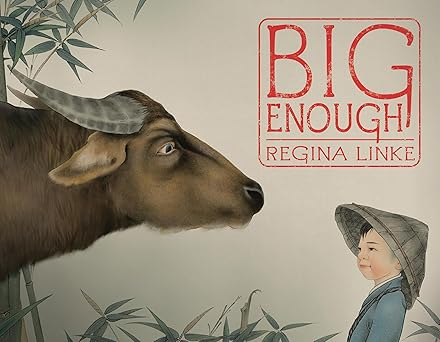
I learned about this book from an episode of “Asian American, the Ken Fong podcast”, a discussion with Regina Linke, a Taiwanese American artist, who blended traditional ink and wash techniques with digital painting for her illustrations.

I’ve read a lot of books about the Japanese American incarceration during World War II (see my previous posts), but this was a unique story about a family whose Nisei (2nd generation) daughter had meningitis when she was five, resulting in a mental disability (autism?) then became a ward of the state of California when her family was evacuated and incarcerated by the U.S. government. Family members never talked about her and they assumed she was dead, but in 2018, her nephew, David Mas Masumoto, was contacted by a social worker who read the obituary of Masumoto’s mother and recognized that a resident in their institution had the same last name as his mother’s maiden name.
Masumoto’s beautiful writing blends poetry, history, and ponderings about his aunt’s life during those many decades of separation. The woodblock prints by Patricia Wakida introducing each chapter provide evocative illustrations of the peach and grape farm

Jeff Chu embodies the unique combination of being Chinese American, a person of faith, a professional journalist/writer and gay to tell this compelling and important book asking the question, “Does Jesus Really Love Me? A Gay Christian’s Pilgrimage in Search of God in America”. Chu chronicles his cross-country journey to understand Christianity in America and their stance on homosexuality.
Chu’s analysis and description of churches and denominations could be included in any Church History or Contemporary Theology class. Clearly, he earned the trust of people he interviewed and tells their stories, as well as his own, with honesty, humor and heartbreaking detail.
I’m honored to count among my friends, Liz Cooledge Jenkins, who just had a book released”: “Nice Churchy Patriarchy: Redeeming Women’s Humanity from Evangelicalism“.
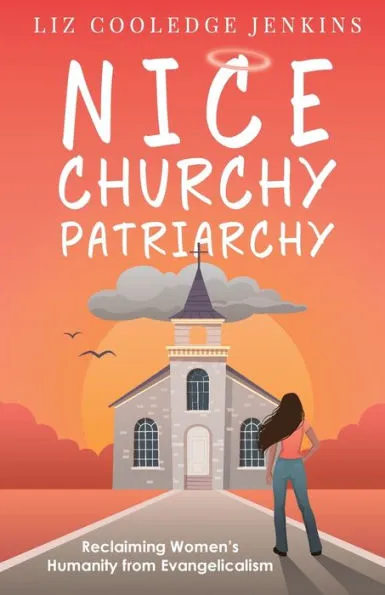
Liz describes herself as “a recovering evangelical exploring how we build different kinds of faith communities together - and a different kind of world.”
Liz calls out the centering of male leadership and voices, and the diminishing and discrediting of the voices and roles of women and people of color. Jenkins questions many of the oh-so-familiar and unquestioned embedded assumptions in our auto-pilot interpretations of biblical narratives.
In this Advent season, anticipating the celebration of the birth of Jesus, the Son of God, we repeat the words to oh-so-familiar Christmas carols…”Mary had a baby, yes, Lord“… “Silent Night. Holy Night. All is Calm…” and images from classic paintings and Sunday School coloring pages depict Mary, Joseph and baby Jesus in a manger filled with hay in a stable surrounded by the dark sky with a gigantic star. Usually these images and certainly the songs include donkeys, cows (The cattle are lowing, the poor baby wakes…“), but only Joseph with Mary at Jesus’ birth.
In a conversation with another good friend, a retired Professor of Nursing whose expertise is in Labor & Delivery and Maternal Health, she guffawed at the notion that Mary delivered baby Jesus with only Joseph present. For births at that time, the norm was for a group of skilled and experienced women – doulas/midwives, who paid attention to those visibly pregnant in their communities.
The network of women in the village would have noticed the arrival of a very pregnant young girl, and paid attention to where she and the man with her found shelter. When it came time for a baby to be born, word spread and this group of skilled and experienced women descended on the household to care for the mother through delivery, bringing needed supplies and food. This was the norm.
The morning after the above conversation, an aquaintance, a male Christian leader, posted (on social media) a series of pretty graphic images of Joseph doing his solo best to help Mary through her delivery of baby Jesus. I commented on what I had learned about the standard practices at the time of Jesus’ birth: communal help from skilled and experienced women from “the little town of Bethlehem” present to assist with the birth and bringing food and supplies for the mother and the newborn baby. (I think he may have either unfriended me or taken the post down, because I haven’t been able to find it.)
These women were not included in the biblical narratives (written later by Matthew, Mark, Luke and John) nor in the classic paintings or Sunday School coloring pages. We are, however, familiar with the story-line and images of the presence of the shepherds and the three kings bringing gold, incense and myrrh.
I get it, the narrative and images of the 3 kings served to illustrate that Jesus was no ordinary baby, but a “newborn king”, the “long-expected Messiah”. However, as I’ve reflected on Liz’s message of the tendency to center male voices and narratives and what I learned from my Nursing Professor friend, I’m comforted re-imagining Jesus’ birth surrounded by women who were not taken off guard, but who had experience and expertise, delivering God-in-human-flesh.
What’s Gone On the Past Few Years at Seattle Pacific University
The last two years have been a disheartening scene at SPU. Seattle Pacific University’s Board of Trustees rejected the recommendations of a task force comprised of faculty, staff, administrators and trustees, who met weekly during the 2021-22 academic year to determine if there was a possible “third way” for the university to maintain its policy for employees to affirm committed Christian faith, and recognize that there are Christian faith traditions that affirm that one can be a committed Christian and be gay and married. The Board refused to consider this proposal, rejected the task force’s recommendations, and doubled down on the university’s alignment and affiliation with the Free Methodist church, which affirms the sanctity and legitimacy of marriage only between a man and a woman and that anything outside of that is sin.
The actions and stance of SPU’s Board of Trustees have resulted in a cascade of student walk-outs, sit-ins outside the interim president’s office and other protests, resignations from board members who disagreed with the decision, employee resignations, a faculty vote of no-confidence in the Board of Trustees, alumni who want nothing to do with their alma mater, and lawsuits.
The Delight and Affirmation of Lavender Graduation
 |  |
Given the dark chaos of these past two years at Seattle Pacific University, in early June, I was honored to accompany my friend, who was the Alumni Speaker at Seattle Pacific University’s Lavender Graduation, which honored 60 graduating seniors who identify as LGBTQ+. Lavender Graduation ceremonies are held on many college campuses, “an informal complement to an institution’s formal commencement ceremony rather than a replacement.”
As each graduate walked up to the podium, they introduced themselves with their name and some or all of the following: pronouns, major(s), degree(s), and gender identity(ies). Some of the gender terms were new to me, many more than “gay/straight” that were the norm when I was younger – decades (a half century!) ago. After each graduate introduced themselves and received a lavender cord, those of us in the audience joined in shouting the affirmation, “We see you. We hear you. We celebrate you!”
An Insult to God
On Pentecost Sunday, Michelle Lang-Raymond, Founder and Executive Director of Acts on Stage and Owner of The Scene in South Park in Seattle, preached at my church, and her remarks included:
“There’s a misguided notion in Christendom that we are supposed to be the same, look the same, act the same, because “same” means “unity”, that there is a unity birthed out of sameness that is somehow ideal when it’s NOT. The idea is that to look the same is that we are all together, that we are moving as one, that we are unified, but what I learned is that it made us more judgemental. It made us look at each other and decide “how close are you to the same or are you NOT”.
One of the things that church taught me was that different was not OK. Sameness is not the kind of unity that God honors. That is not Pentecost. To not appreciate each other’s uniqueness/differences is an offense, an insult to God’s creativity.”
Takeaways
Isn’t this affirmation what all of our hearts long to hear? “We See You. We Hear You. We Celebrate You!”
Isn’t our God’s endless creativity something to marvel at and ponder?
Sunday, February 19, 2023 marked the 81st anniversary of the issuing of Executive Order 9066 by President Franklin Roosevelt, which authorized the mass forced removal and incarceration of people of Japanese ancestry from the West Coast of the United States. Under the guise of military necessity and national security after Japan’s attack on Pearl Harbor, this order was a “convenient” response to long-standing resentment of people of Japanese ancestry for their successful farming practices up and down the West Coast.

My parents, grandparents, and 26 aunties, uncles and cousins were among the more than 125,000 people, two-thirds of them American citizens, who were given a week to pack what they could carry, wrap up their affairs and board trains or buses (windows covered) that took them to temporary “Assembly Centers”: fairgrounds, race tracks, and warehouses surrounded by barbed wire. A shared painful and vivid memory was stuffing straw mattresses to sleep in smelly horse stalls at the Puyallup Fairgrounds, ridiculously named “Camp Harmony” by government public relations officials.
Months later, they were transported to one of ten hastily built concentration camps with tar paper covered buildings in desolate desert or swamp locations around the country. The reality of being in a camp with guard towers with guns pointing IN, encircled and enclosed by barbed wire is as stamped into my identity as the DNA in my body from my parents and ancestors.
Barbed wire is part of my identity as a third-generation Japanese American whose family members were incarcerated. I claim barbed wire as part of my heritage. To claim something, you’re demanding it or saying it’s true, an assertion that something is true or factual. To stake a claim is when someone expresses their right to something that belongs to them, like your medical records or the deed to your home.
Who are those among us who have barbed wire as part of their identity, heritage or current reality? What does solidarity, kinship, and advocacy look like?
I’ve appreciated friends who are taking the time to hear stories, read and learn to increase understanding, awareness and empathy.
Organizations telling the story and organizing advocacy events:
A handful of books to get you started (I was able to check all of these out from the Seattle Public Library!)
Children’s Books: Dash (Kirby Larson), Love in the Library (Maggie Tokuda Hall), The Bracelet (Yoshiko Uchida), Baseball Saved Us (Ken Mochizuki),
Adult Books: When Can We Go Back to America? (Susan Kamei), The Eagles of Heart Mountain (Bradford Pearson) (book talk with author), Setsuko’s Secret (Shirley Ann Higuchi), American Sutra: A Story of Faith and Freedom in the Second World War (Duncan Ryuken Williams), Imprisoned: The Betrayal of Japanese Americans During World War II (Martin W. Sandler), Seen and Unseen: What Dorothea Lange, Toyo Miyatake and Ansel’s Photographs Reveal About the Japanese American Incarceration (Elizabeth Patridge)
 Susan Okamoto Lane