Susan Okamoto Lane

Identity, Privilege: Aha Moments


2 Comments

Epiphany: The Grandmothers of Jesus & My Grandmother

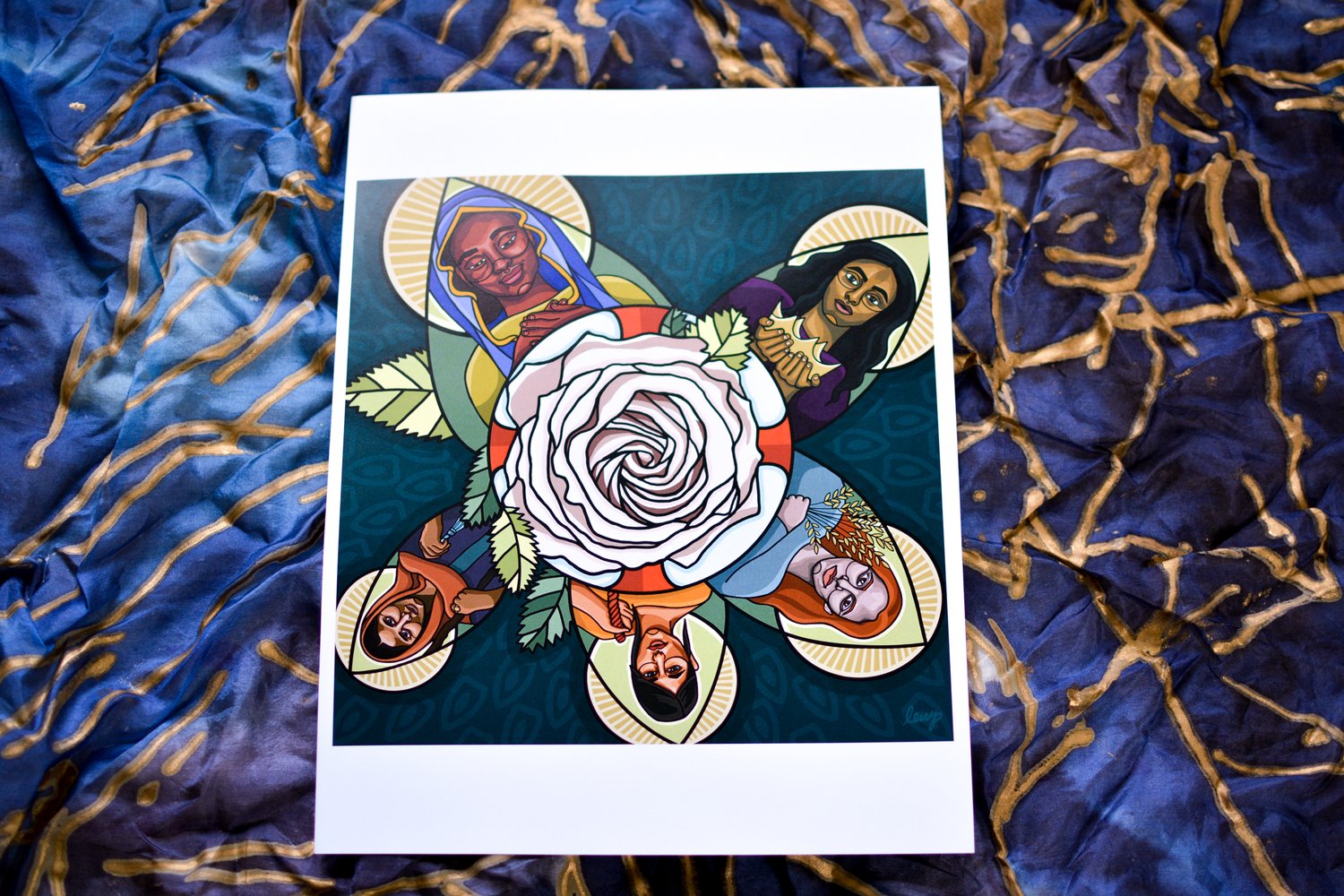
The “Grandmothers of Jesus” in the Advent reflections and Art Installation at Lake Burien Presbyterian caused me to think about my own grandmothers, especially my dad’s mother Sugie Shino Okamoto.
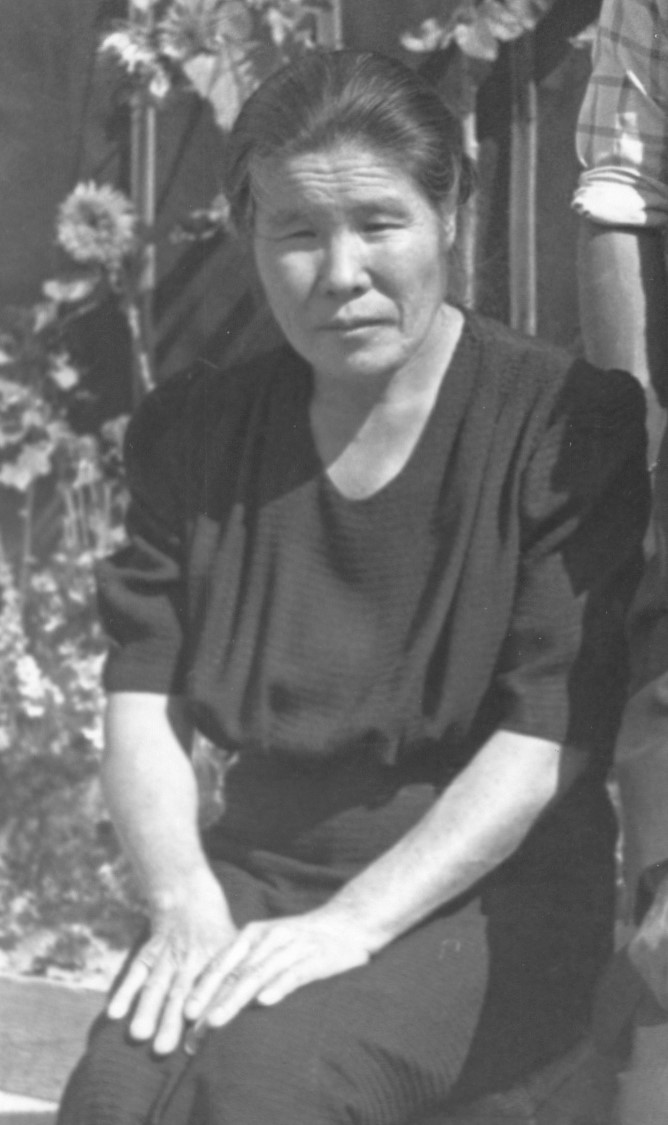
Sugie was born on April 18, 1893 in Kumamoto, Japan to a farming family. She was my grandfather, Juhei’s second wife – he was 46 and she was 27 years old when they got married.

I’ve been thinking a lot about Sugie’s story and realize that her life had many elements similar to the grandmothers of Jesus:

  • immigration to a new and unknown land
  • a husband old enough to be her father, whose first wife ran off with a gangster
  • bankruptcy and poverty 
  • childbirth in a one-room hotel
  • tenant farming moving from one place to another 
  • raising four children while at the same time having step children from her husband’s first marriage join the family
  • dislocations from war and being identified as the enemy 

After Japan bombed Pearl Harbor in December 1941 and FDR’s issuing of Executive Order 9066, Sugie was among the more the 125,000 Japanese Americans who were given six days notice to close up their homes, sell their businesses and pack two suitcases each to be “relocated” by the U.S. government away from the West Coast of the U.S.

Sugie and her family were first sent to a temporary “Assembly Center” in Pinedale, California then imprisoned at Tule Lake in northern California, one of ten hastily built “Relocation Camps”. What was it like for a Sugie, who was used to living and working on farms in Western Washington to face and adjust to imprisonment in the hot, windy desert of northern California with tar paper covered barracks, communal mess halls, latrines and shower buildings surrounded by barbed wire fences and guard towers?

Between 1942 and 1944, the losses and disintegration of life intensified for Sugie. Her four step children refused to sign the loyalty oath so were classified as ‘enemy aliens’ and assigned to the high security camp.  Sugie, her husband and children were transferred to the Heart Mountain, Wyoming camp, and from there, her two daughters left to go to New York City to work and attend school and her oldest son, my dad, joined the U.S. army. Her husband then suffered a severe heart attack, leaving him weak and disabled, and because of the family disintegration in camp, I don’t think their teenage son was much help making decisions and supporting them.

After the camps closed, Sugie, Juhei and their son returned to the Seattle area. Sugie was widowed in 1953, was a widow for 39 years, and died when she was 99 years old.

A few things I remember about Sugie’s life

  • Every Spring, Sugie would oversee her grandsons as they prepared her garden plot. In addition to turning over the soil and adding fertilizer, she usually instructed them to dig up another couple square feet of grass for her prolific garden. Her soil was amazing – fertile with NO weeds or rocks.  She grew giant spinach, squash, daikon, and beautiful flowers which she happily distributed to her children and grandchildren.
  • Even into her early 90’s, Sugie would walk a mile from her apartment in the Central Area to the International District to do her grocery shopping and walk home in her rubber soled pumps. 
  • Sugie loved “The Lawrence Welk Show”, and if we tried to change the channel when she was watching it, she would jump up, scold us, and turn it back to that show. She enjoyed singing in a classical Japanese style, and I was impressed when she would take the mike at Japanese community picnics or New Year’s parties.

I’d love to have a long conversation with Sugie when I get to heaven, to hear about her life and experiences and explore the parallels of our lives – she had her youngest child when she was 38; I had my kids when I was 41 and 43; she was comfortable with a microphone in her face, and I’m comfortable with public speaking with a mike… and so much more. HOWEVER, I stopped when I realized that Sugie was a devout Buddhist, not a Christian. Sugie, my other grandparents and all my ancestors were Buddhists; my path to Christianity was part of my parents’ desire for me and my siblings to be All American after their World War II experience.

According to what I understood from my Evangelical Christian training (Young Life, InterVarsity, Campus Crusade, and a variety of churches and conferences), with “non Christians”, I was supposed to “witness” to them by word or deed, praying that God’s Spirit would soften their hearts “to turn toward Jesus” and that they would pray the prayer of salvation and then they wouldn’t go to hell.

I’m comforted, chastised and challenged by the Grandmothers of Jesus – non Jews, outsiders, in many instances without voice or power – that in Jesus’ very DNA, God in human flesh, they were like my grandmother Sugie. 

So that’s been my recent epiphany – realization – Aha moment –  that God’s Kingdom is more expansive and inclusive than I ever imagined.

As Pastor Lina Thompson asked us in her sermon about the Magi: Like the Magi, what are the steps to go a different way, to open myself to from this epiphany?

I’m just beginning, but here are a few things:

  • I’m recognizing that Buddhism is part of my spiritual heritage, and there’s a lot of catch-up learning for me.
    • I visited Nichiren Buddhist church, where my grandparents attended before and after WW II. They have quarterly services; I went to one in November and plan to go to future ones. I’m on their mailing list.
    • I’m reaching out to Buddhist friends & family members to learn their stories and listen to how and what they draw from their Buddhist faith & practices
  • I’m researching my family history. I’ve compiled the names of 32 family members who were incarcerated during World War II. My siblings and I are going to the Japanese American National Museum in Los Angeles and will be putting a stamp next to the names of family members in the Ireicho book, a collection of the names of the more than 125,000 Japanese Americans incarcerated during WW II.
  • I’m reading books like ‘When Can We Go Back to America?
  • I’m telling my story and sharing what I’m learning like I have in this blog post.


Leave a comment

Complicated Remembrance of Veterans Day

During World War II, my father, Toshikazu (Tosh) Okamoto, served in the famed 442nd Regimental Combat Team, the most highly decorated military unit in American history. Stories of 442nd RCT, 100th Battalion and Military Intelligence Service, all-Japanese American military units are legendary. Most of these Nisei soldiers volunteered or were drafted into military service from incarceration camps where they and their families were detained by the U.S. government. Their heroic actions and risks they took were fueled, in part, by their fierce desire to prove they were loyal Americans and not the enemy.

Before we skip ahead, I want to pause and reiterate.

Most Nisei who served in the U.S. military during World War II

did so while their families were incarcerated by the U.S. government.

After World War II when the camps were closed, soldiers returned from the war, married and started families, Nisei Veterans Committee (NVC) activities filled my childhood: my girl scout troop was sponsored by NVC; family vacations were often to Nisei Vets reunions in Hawaii, California, Oregon or hosted in Seattle; I was the NVC delegate to Washington Girls State, a one-week conference sponsored by the American Legion; an NVC scholarship supported my college expenses; and I looked forward to annual events like the Memorial Day service at Lakeview Cemetery, summer picnics, bazaars, and the NVC Christmas party (with a Japanese American Santa Claus!).

An additional complication in my father’s family, as was the case in many other Japanese American families pre-World War II. His older siblings were born in the U.S., went to school in Japan, returned home as young adults, and had gotten jobs, married, and were starting their families. His older brother was drafted into the Army and was stationed at Fort Lewis awaiting basic training. After Japan bombed Pearl Harbor, he was discharged; he and his wife were sent to an incarceration camp and later he was classified as an enemy alien.

It makes sense to me, as it did to my dad later why his older siblings refused to sign the Loyalty Questionaire. The Japanese Americans who took this action were sent to Tule Lake, the high security segregation center.

So on this Veterans Day 2022, I want to honor those Nisei, like my dad, who volunteered or were drafted from camps to serve in the famed 442nd Regimental Combat Team, 100th Battalion & Military Intelligence Service, and those who served and gave their lives in the Korean War, Vietnam War and other conflicts. I also want to honor those Nisei who answered “No No” on the loyalty questionnaire and as a result were sent to the high security camp at Tule Lake, and the Nisei who refused to be drafted into the army from camps while their parents were still incarcerated and were sent to prison at McNeil Island Penitentiary.


1 Comment

Back to Basics: My Pronouns (She/Her/Hers)

I’ve heard some folks express skepticism and criticism of preferred pronouns being added as identifiers. (My unconfirmed guess is that many of these skeptics may also be from the “lightly seasoned” generation.) I have a friend who’s working for a non-profit with proud organizational pronouncements that “diversity enriches all of our lives” and “the value and importance of adapting to a changing world”. My friend reported the controversy that erupted in a board/management meeting regarding including preferred pronouns as identifiers and how bewildering that was.

It seems right for an individual to let others know how they prefer to be addressed or referred to and for others to respect that. My first name is “Susan”, and I don’t like it when people presume it’s OK to call me “Sue” or the deadly “Susie-Q”. (Caveat: my family members call me “Su”, “Aunty Su” or the little ones have called me “Su Su”, but in my mind and when they spell out my shortened name, it’s without the ‘e’ at the end!)

I remember when “GIRLS” and “LADIES” were presumed to be perfectly OK when addressing groups of females: in the workplace, community organizations, churches, etc., even if those being addressed were well past puberty or wearing jeans & sweatshirts just like their male counterparts. Doing a little research, I see that “lady” was loaded with all kinds of connotations of class and social status. The terminology switched from “lady/ladies” to “woman/women” the early 1900’s and definitely during the Women’s Liberation movement in the 1960’s. More recently “female” is being used as well as the question asked whether gender needs to be part of an individual’s description (e.g. “female physician”). I’m relieved and happy about these changes as I always felt like there was something demeaning about how females were being labelled and addressed.

So, back to preferred pronouns. “They/Them/Theirs” is a new one being used and discussed. I like that 1) It’s not gender specific and 2) It recognizes the communal aspect of our identities. I’ll end with this wonderful quote.

“The Triune God was the original singular ‘they’

Rev. Dr. Joyce Del Rosario, Evolving Faith 2022


1 Comment

My Weekly “Poke”

Recently, something I’ve heard or read rolls around in my head and body; it feels like the Spirit is prodding or poking me: gently and persistently. Last week I participated in the Evolving Faith conference www.evolvingfaith.com where I heard powerful speakers and a modeling of faith that woke up something new in me. The Evolving Faith home page greets us:

Welcome home, questioner and doubter. Question-asker, status-quo upender, church kid, Bible nerd, rebel, yes, you. You wonderer, spiritual refugee, weary one, idealistic cynic and disappointed disciple.

The Spirit has been busy, amplifying, emphasizing, stirring, OK… poking me toward some kind of action/response. As I write this, my inner critic is saying, “Well, duh, Susan.” Getting going on this blog was from one of Her pokes. Each week, I will be sharing a gem from speakers, readings, discussions, reflections that have been prodding me.

-Alma Zaragoza Petty, @thedoczp, author of “Chingona: Owning Your Inner Badass for Healing & Justice”

“Being a fearless Chingona is knowing your story, to break cycles of intergenerational trauma and to own our own epistomologies.

We can take all the space we deserve to heal and love one another”


3 Comments

Back to the Basics: What’s my name?

West-coast Japanese Americans were seen as the enemy and incarcerated in “relocation centers” = “concentration camps” after Japan bombed Pearl Harbor in 1941. When my parents met and were married after World War II, they, like many of their Japanese American peers focused on being seen as ALL AMERICAN; when they had kids, our names reflected this desire: Joyce Lynn, Susan Jean, John Douglass, Sheila Jan Okamoto. (More about this in future posts.)

When I married Tom Lane, it didn’t occur to me that I could/would do anything other than take my husband’s last name, so I became Susan Jean Lane. For years after, when I saw my full name, I wondered, “Who is that?”. It felt like an important part of me had been erased.

I contemplated changing my name, practicing writing out different versions, and began informally going by Susan Okamoto Lane, but there’s a big difference between informal usage and legally changing one’s name (even just one’s middle name!).

**Daunting**

Think about the myriad of cards you might have in your wallet: Driver’s License, school or work ID, Social Security card, charge cards, library card, medical insurance, PLUS changing one’s name with your employer/school and all your medical providers (I have a lot!).

Finally as a gift to myself for my 60th birthday (see title of previous post), I gave myself a legal name change: Susan Okamoto Lane.

Sundee Tucker Frazier expressed what my name change meant to me in her book, “Check All That Apply: Finding Wholeness as a Multiracial Person”:

“You can’t change your identity, but you can change how you identify.

Accept who you are and then be who you want to be.”