
I’m honored to count among my friends, Liz Cooledge Jenkins, who just had a book released”: “Nice Churchy Patriarchy: Redeeming Women’s Humanity from Evangelicalism“.
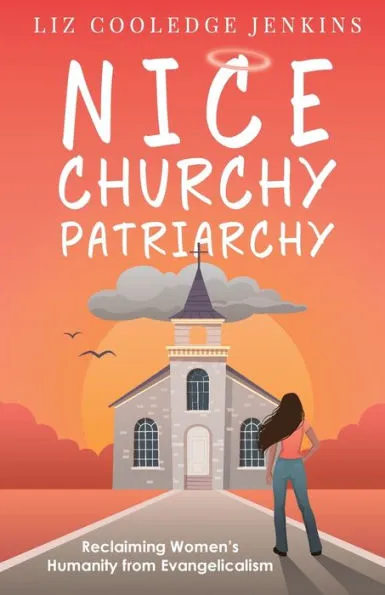
Liz describes herself as “a recovering evangelical exploring how we build different kinds of faith communities together - and a different kind of world.”
Liz calls out the centering of male leadership and voices, and the diminishing and discrediting of the voices and roles of women and people of color. Jenkins questions many of the oh-so-familiar and unquestioned embedded assumptions in our auto-pilot interpretations of biblical narratives.
In this Advent season, anticipating the celebration of the birth of Jesus, the Son of God, we repeat the words to oh-so-familiar Christmas carols…”Mary had a baby, yes, Lord“… “Silent Night. Holy Night. All is Calm…” and images from classic paintings and Sunday School coloring pages depict Mary, Joseph and baby Jesus in a manger filled with hay in a stable surrounded by the dark sky with a gigantic star. Usually these images and certainly the songs include donkeys, cows (The cattle are lowing, the poor baby wakes…“), but only Joseph with Mary at Jesus’ birth.
In a conversation with another good friend, a retired Professor of Nursing whose expertise is in Labor & Delivery and Maternal Health, she guffawed at the notion that Mary delivered baby Jesus with only Joseph present. For births at that time, the norm was for a group of skilled and experienced women – doulas/midwives, who paid attention to those visibly pregnant in their communities.
The network of women in the village would have noticed the arrival of a very pregnant young girl, and paid attention to where she and the man with her found shelter. When it came time for a baby to be born, word spread and this group of skilled and experienced women descended on the household to care for the mother through delivery, bringing needed supplies and food. This was the norm.
The morning after the above conversation, an aquaintance, a male Christian leader, posted (on social media) a series of pretty graphic images of Joseph doing his solo best to help Mary through her delivery of baby Jesus. I commented on what I had learned about the standard practices at the time of Jesus’ birth: communal help from skilled and experienced women from “the little town of Bethlehem” present to assist with the birth and bringing food and supplies for the mother and the newborn baby. (I think he may have either unfriended me or taken the post down, because I haven’t been able to find it.)
These women were not included in the biblical narratives (written later by Matthew, Mark, Luke and John) nor in the classic paintings or Sunday School coloring pages. We are, however, familiar with the story-line and images of the presence of the shepherds and the three kings bringing gold, incense and myrrh.
I get it, the narrative and images of the 3 kings served to illustrate that Jesus was no ordinary baby, but a “newborn king”, the “long-expected Messiah”. However, as I’ve reflected on Liz’s message of the tendency to center male voices and narratives and what I learned from my Nursing Professor friend, I’m comforted re-imagining Jesus’ birth surrounded by women who were not taken off guard, but who had experience and expertise, delivering God-in-human-flesh.
 Susan Okamoto Lane