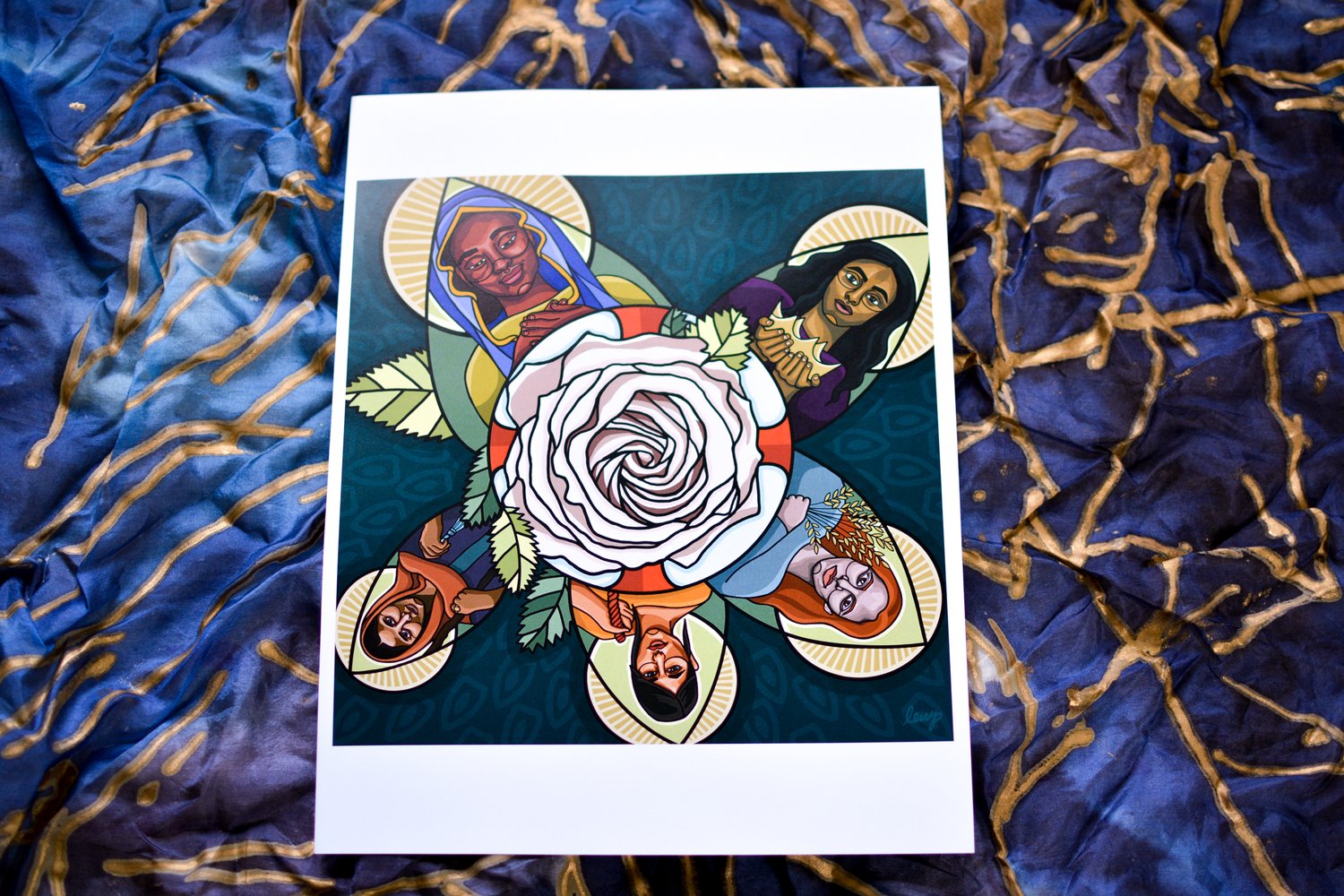
The “Grandmothers of Jesus” in the Advent reflections and Art Installation at Lake Burien Presbyterian caused me to think about my own grandmothers, especially my dad’s mother Sugie Shino Okamoto.
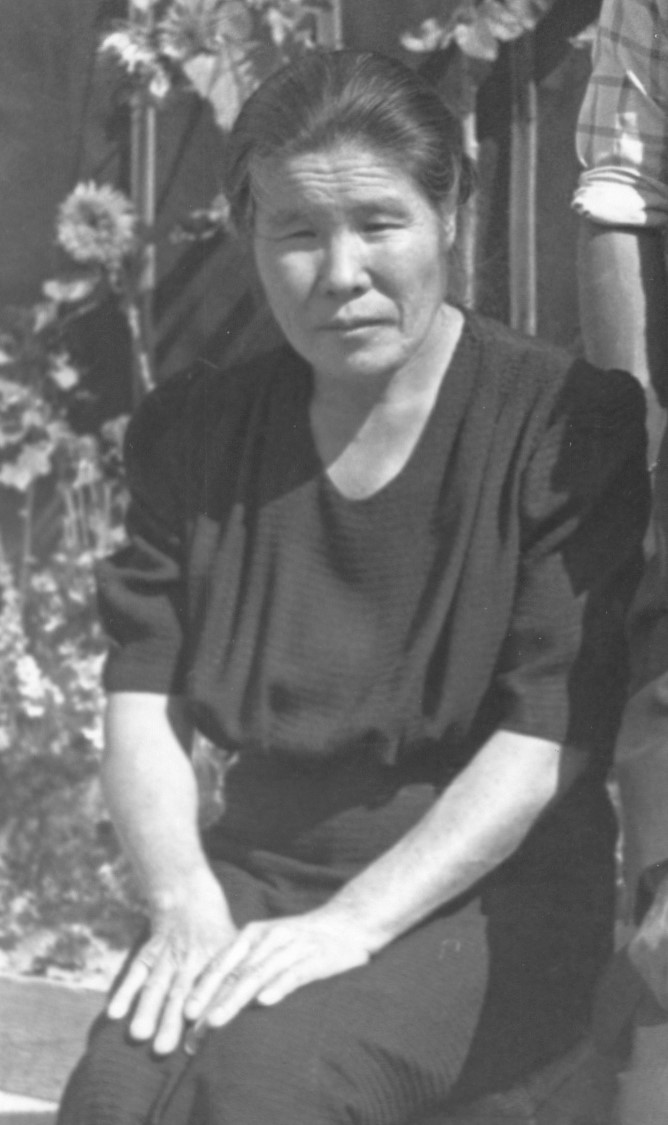
Sugie was born on April 18, 1893 in Kumamoto, Japan to a farming family. She was my grandfather, Juhei’s second wife – he was 46 and she was 27 years old when they got married.
I’ve been thinking a lot about Sugie’s story and realize that her life had many elements similar to the grandmothers of Jesus:
- immigration to a new and unknown land
- a husband old enough to be her father, whose first wife ran off with a gangster
- bankruptcy and poverty
- childbirth in a one-room hotel
- tenant farming moving from one place to another
- raising four children while at the same time having step children from her husband’s first marriage join the family
- dislocations from war and being identified as the enemy
After Japan bombed Pearl Harbor in December 1941 and FDR’s issuing of Executive Order 9066, Sugie was among the more the 125,000 Japanese Americans who were given six days notice to close up their homes, sell their businesses and pack two suitcases each to be “relocated” by the U.S. government away from the West Coast of the U.S.
Sugie and her family were first sent to a temporary “Assembly Center” in Pinedale, California then imprisoned at Tule Lake in northern California, one of ten hastily built “Relocation Camps”. What was it like for a Sugie, who was used to living and working on farms in Western Washington to face and adjust to imprisonment in the hot, windy desert of northern California with tar paper covered barracks, communal mess halls, latrines and shower buildings surrounded by barbed wire fences and guard towers?
Between 1942 and 1944, the losses and disintegration of life intensified for Sugie. Her four step children refused to sign the loyalty oath so were classified as ‘enemy aliens’ and assigned to the high security camp. Sugie, her husband and children were transferred to the Heart Mountain, Wyoming camp, and from there, her two daughters left to go to New York City to work and attend school and her oldest son, my dad, joined the U.S. army. Her husband then suffered a severe heart attack, leaving him weak and disabled, and because of the family disintegration in camp, I don’t think their teenage son was much help making decisions and supporting them.
After the camps closed, Sugie, Juhei and their son returned to the Seattle area. Sugie was widowed in 1953, was a widow for 39 years, and died when she was 99 years old.
A few things I remember about Sugie’s life
- Every Spring, Sugie would oversee her grandsons as they prepared her garden plot. In addition to turning over the soil and adding fertilizer, she usually instructed them to dig up another couple square feet of grass for her prolific garden. Her soil was amazing – fertile with NO weeds or rocks. She grew giant spinach, squash, daikon, and beautiful flowers which she happily distributed to her children and grandchildren.
- Even into her early 90’s, Sugie would walk a mile from her apartment in the Central Area to the International District to do her grocery shopping and walk home in her rubber soled pumps.
- Sugie loved “The Lawrence Welk Show”, and if we tried to change the channel when she was watching it, she would jump up, scold us, and turn it back to that show. She enjoyed singing in a classical Japanese style, and I was impressed when she would take the mike at Japanese community picnics or New Year’s parties.
I’d love to have a long conversation with Sugie when I get to heaven, to hear about her life and experiences and explore the parallels of our lives – she had her youngest child when she was 38; I had my kids when I was 41 and 43; she was comfortable with a microphone in her face, and I’m comfortable with public speaking with a mike… and so much more. HOWEVER, I stopped when I realized that Sugie was a devout Buddhist, not a Christian. Sugie, my other grandparents and all my ancestors were Buddhists; my path to Christianity was part of my parents’ desire for me and my siblings to be All American after their World War II experience.
According to what I understood from my Evangelical Christian training (Young Life, InterVarsity, Campus Crusade, and a variety of churches and conferences), with “non Christians”, I was supposed to “witness” to them by word or deed, praying that God’s Spirit would soften their hearts “to turn toward Jesus” and that they would pray the prayer of salvation and then they wouldn’t go to hell.
I’m comforted, chastised and challenged by the Grandmothers of Jesus – non Jews, outsiders, in many instances without voice or power – that in Jesus’ very DNA, God in human flesh, they were like my grandmother Sugie.
So that’s been my recent epiphany – realization – Aha moment – that God’s Kingdom is more expansive and inclusive than I ever imagined.
As Pastor Lina Thompson asked us in her sermon about the Magi: Like the Magi, what are the steps to go a different way, to open myself to from this epiphany?
I’m just beginning, but here are a few things:
- I’m recognizing that Buddhism is part of my spiritual heritage, and there’s a lot of catch-up learning for me.
- I visited Nichiren Buddhist church, where my grandparents attended before and after WW II. They have quarterly services; I went to one in November and plan to go to future ones. I’m on their mailing list.
- I’m reaching out to Buddhist friends & family members to learn their stories and listen to how and what they draw from their Buddhist faith & practices
- I’m researching my family history. I’ve compiled the names of 32 family members who were incarcerated during World War II. My siblings and I are going to the Japanese American National Museum in Los Angeles and will be putting a stamp next to the names of family members in the Ireicho book, a collection of the names of the more than 125,000 Japanese Americans incarcerated during WW II.
- I’m reading books like ‘When Can We Go Back to America?
- I’m telling my story and sharing what I’m learning like I have in this blog post.

 Susan Okamoto Lane
January 18, 2023 at 10:44 pm
Thank you for this piece, Susan. My uncle, who was a Southern Baptist minister from a Buddhist family was told that his Buddhists relatives were going to hell. His thought was that he’d rather go to hell with people he loved than to heaven with a bunch of white people he didn’t know. He (Rev. Dr. Dickson Kazuo Yagi) has created an organization for the study of Christianity and Buddhism.
January 18, 2023 at 11:11 pm
I’ll look up Dr. Yagi!’s work! Thank yuh ou so much, Gordy 🙏🏼👍🏾